
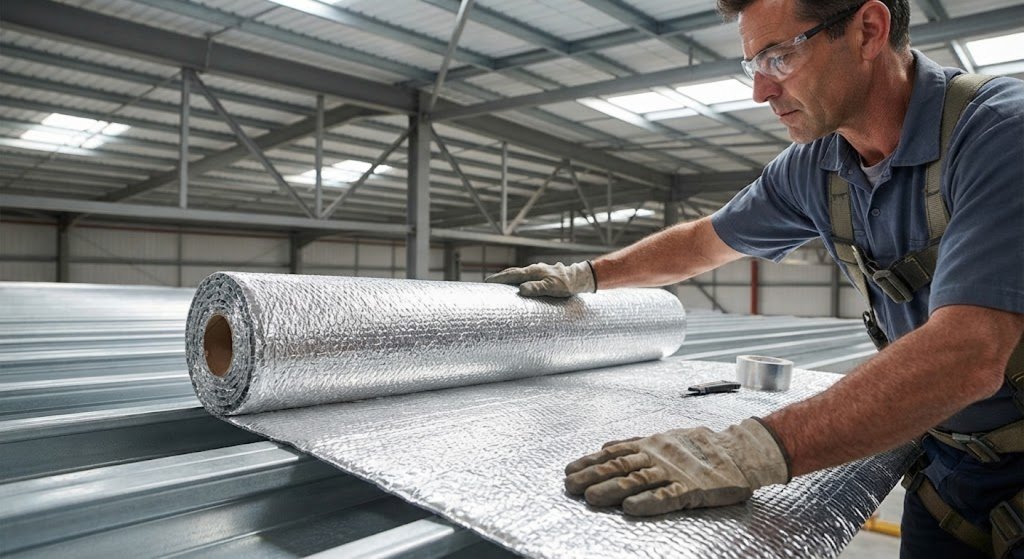
As businesses and industries look for more efficient ways to manage heat transfer, energy consumption and insulation requirements, lightweight reflective insulation materials have become increasingly popular. Among these solutions, an aluminium air bubble insulation sheet is widely used for applications where thermal protection, easy installation and space efficiency are important.
Unlike conventional insulation materials that primarily rely on thickness and bulk to slow down heat transfer, air bubble insulation sheets use a combination of reflective surfaces and trapped air layers. This construction makes them suitable for a wide range of applications, including industrial buildings, warehouses, roofing systems, HVAC installations, packaging and other areas where reducing radiant heat transfer is important.
However, choosing the right insulation material requires more than simply comparing prices. Buyers need to consider the product’s construction, thickness, bubble structure, reflective surface, application requirements and the reliability of the supplier or manufacturer.
This guide explains how aluminium air bubble insulation sheets work, their key benefits, common applications and the factors businesses should consider before purchasing them.
What Is an Aluminium Air Bubble Insulation Sheet?
An aluminium air bubble insulation sheet is a lightweight reflective insulation material made using one or more layers of aluminium foil or a reflective metallised film combined with an air bubble layer.
The air bubbles create a layer of trapped air within the material, while the aluminium surface helps reflect radiant heat. Depending on the product design, these insulation sheets may be available in different layer configurations, bubble sizes, thicknesses and roll dimensions.
The structure of an air bubble insulation sheet generally consists of:
- A reflective aluminium or metallised surface
- A layer of air bubbles
- One or more supporting layers
- Sealed or laminated construction for improved durability
This combination provides a flexible and lightweight insulation solution that can be installed in areas where conventional, bulky insulation materials may be difficult to use.
The performance of the material depends on several factors, including its construction, surface reflectivity, installation quality and the type of heat transfer involved in the application.
How Does Aluminium Air Bubble Insulation Sheet Work?
To understand how aluminium air bubble insulation works, it is important to understand the three primary methods of heat transfer: conduction, convection and radiation.
Aluminium air bubble insulation is particularly useful in managing radiant heat transfer.
1. Reflective Aluminium Surface
The aluminium surface reflects a significant portion of radiant heat away from the protected area. This is particularly useful in applications exposed to sunlight or other sources of radiant heat.
For example, when used beneath a roof or in a building envelope, the reflective surface can help reduce the amount of radiant heat transferred into the space below.
2. Trapped Air Layer
The air bubbles create numerous small pockets of trapped air. Air is a relatively poor conductor of heat compared with solid materials, which helps reduce the direct transfer of heat through the insulation layer.
The bubble structure also gives the material its lightweight and flexible characteristics.
3. Combined Thermal Barrier
The reflective surface and air bubble layer work together to create a thermal barrier. The reflective layer helps manage radiant heat, while the trapped air layer contributes to reducing heat transfer through the material.
This makes the insulation sheet suitable for applications where a thin, flexible and lightweight insulation solution is preferred.
Key Benefits of Aluminium Air Bubble Insulation Sheets
The suitability of an insulation material depends on the application. However, aluminium air bubble insulation sheets offer several advantages that make them useful across industrial, commercial and packaging applications.
1. Helps Reduce Radiant Heat Transfer
One of the primary advantages of an aluminium air bubble insulation sheet is its reflective surface.
The aluminium layer helps reflect radiant heat, making the material useful in areas exposed to direct sunlight or high external temperatures.
This is one reason why reflective insulation materials are commonly considered for:
- Roofing applications
- Industrial buildings
- Warehouses
- Storage facilities
- HVAC systems
- Containers and vehicles
2. Lightweight and Easy to Handle
Compared with many conventional insulation materials, air bubble insulation sheets are lightweight and flexible.
This makes them easier to:
- Transport
- Store
- Cut
- Carry
- Position
- Install
The lightweight nature can be particularly useful in applications where adding excessive weight to a structure is undesirable.
3. Easy to Cut and Install
The flexible roll-based format allows the material to be cut according to the requirements of the installation area.
Depending on the application, the sheet can be installed using appropriate methods such as:
- Adhesive systems
- Mechanical fastening
- Taping
- Stapling
- Other application-specific installation methods
The correct installation method depends on the surface, location and intended use of the insulation.
4. Space-Efficient Design
Traditional insulation materials may require considerable thickness to provide the required level of thermal protection.
Aluminium air bubble insulation sheets offer a thin-profile alternative for applications where space is limited.
This makes them useful for areas such as:
- Roof assemblies
- Ductwork
- Walls
- Containers
- Packaging systems
- Industrial structures
The space-saving nature of the product can simplify installation in confined areas.
5. Flexible for Different Applications
Because the material is available in flexible roll formats, it can be adapted to various surfaces and structures.
It can be used for flat surfaces as well as applications where the insulation material needs to be positioned around or across different shapes.
The exact suitability depends on the product design and the requirements of the application.
6. Moisture Resistance Depends on Product Construction
Many aluminium air bubble insulation products are designed with moisture-resistant layers. This can make them suitable for applications where exposure to humidity or moisture is a concern.
However, buyers should not assume that every product offers the same level of moisture protection.
The actual performance depends on:
- Material composition
- Lamination quality
- Edge sealing
- Installation method
- Exposure conditions
Therefore, product specifications should always be evaluated before selecting a particular insulation sheet.
Common Applications of Aluminium Air Bubble Insulation Sheet
Aluminium air bubble insulation sheets are used in several industries because of their lightweight construction and reflective thermal properties.
1. Roofing and Industrial Buildings
Roofs exposed to direct sunlight can transfer considerable radiant heat into the building below.
Reflective insulation sheets may be used as part of a roofing insulation system to help reduce radiant heat transfer.
Common applications include:
- Industrial sheds
- Factory buildings
- Warehouses
- Commercial structures
- Agricultural buildings
- Temporary structures
The insulation material should be installed according to the requirements of the roofing system and the conditions of the building.
2. Warehouses and Storage Facilities
Warehouses often have large roof areas and metal structures that can become significantly hot when exposed to sunlight.
An air bubble insulation sheet can be considered for areas where businesses require a lightweight thermal barrier without significantly increasing the overall load on the structure.
It may be used in:
- Roof insulation
- Wall insulation
- Storage areas
- Temporary warehouses
- Distribution facilities
3. HVAC Duct Insulation
HVAC ductwork can also require insulation to help manage heat transfer between the duct surface and the surrounding environment.
Reflective air bubble insulation materials may be used in suitable duct insulation applications, depending on the system design and required performance.
When selecting insulation for HVAC systems, buyers should consider:
- Operating temperature
- Duct location
- Moisture exposure
- Installation requirements
- Required thermal performance
- Fire and safety requirements
Not every insulation product is suitable for every HVAC application, so technical suitability should be verified before installation.
4. Commercial and Residential Buildings
Aluminium air bubble insulation can also be considered for selected residential and commercial applications.
It may be used in:
- Roof spaces
- Wall systems
- Attics
- Partitions
- Temporary structures
The right product depends on the construction method, local climate, installation conditions and the level of insulation required.
5. Containers and Vehicle Applications
The flexible structure of air bubble insulation sheets makes them suitable for certain vehicle and container insulation applications.
They may be used in:
- Shipping containers
- Transport vehicles
- Storage containers
- Mobile structures
The material can provide a lightweight reflective barrier where reducing heat exposure is important.
6. Packaging and Temperature-Sensitive Applications
Certain air bubble insulation products are also used in protective packaging applications.
The reflective outer layer and bubble structure can provide thermal and physical protection for selected products during storage and transportation.
Applications may include:
- Temperature-sensitive products
- Pharmaceutical packaging
- Food packaging
- E-commerce shipments
- Industrial packaging
The product specification should be selected based on the temperature sensitivity, transportation conditions and protection requirements of the packaged goods.
Aluminium Air Bubble Insulation Sheet vs Traditional Insulation Materials
Different insulation materials are designed for different applications. Therefore, the right choice depends on the type of heat transfer, installation conditions and performance requirements.
| Feature | Aluminium Air Bubble Insulation Sheet | Traditional Bulk Insulation |
| Construction | Reflective layers with trapped air bubbles | Fibrous, foam or other bulk materials |
| Weight | Generally lightweight | May be heavier depending on material |
| Installation | Flexible and easy to handle | May require additional installation effort |
| Space Requirement | Thin-profile option | Can require greater thickness |
| Radiant Heat Management | Reflective surface helps manage radiant heat | Performance varies by material |
| Flexibility | Suitable for many roll-based applications | Depends on material type |
| Moisture Performance | Depends on product construction | Varies significantly by material |
This comparison does not mean one insulation material is universally better than another. The correct choice should be based on the application’s specific requirements.
For example, an aluminium air bubble insulation sheet may be suitable when a lightweight reflective barrier is required, while other insulation systems may be more appropriate for applications requiring high levels of acoustic insulation, specialised fire performance or very high thermal resistance.
What Should You Consider Before Buying an Aluminium Air Bubble Insulation Sheet?
Selecting an insulation sheet solely on the basis of price can result in poor performance or unnecessary replacement costs.
Before purchasing, businesses should evaluate the following factors.
1. Number of Layers
The number and arrangement of layers can affect the construction and performance of the product.
Depending on the application, buyers may find different configurations, such as:
- Single-sided reflective products
- Double-sided reflective products
- Multi-layer insulation systems
The right configuration depends on how and where the insulation will be installed.
2. Bubble Size and Structure
The bubble layer contributes to the construction of the insulation material.
Different bubble sizes and structures may be available for different applications. Buyers should compare the product specifications instead of assuming that all air bubble insulation sheets are identical.
3. Thickness
Thickness is another important factor to evaluate.
A thicker product is not automatically the right choice for every application. The required thickness depends on:
- Application type
- Installation space
- Environmental exposure
- Required insulation performance
- Construction requirements
4. Roll Width and Length
The size of the roll can affect installation efficiency and material wastage.
Before purchasing, businesses should calculate:
- Total area to be covered
- Available installation width
- Number of joints required
- Expected material wastage
Choosing an appropriate roll size can help improve installation efficiency.
5. Reflective Surface Quality
The quality and durability of the reflective surface are important considerations.
A consistent reflective layer is particularly important in applications where radiant heat reflection is a key reason for selecting the product.
6. Tear Resistance and Durability
The insulation material should be able to withstand the handling and environmental conditions expected during installation and use.
Depending on the application, buyers may need to evaluate:
- Tear resistance
- Puncture resistance
- Flexibility
- Lamination strength
- Surface durability
7. Application Requirements
The best insulation sheet for a warehouse roof may not be the same as the best material for packaging.
Before purchasing, clearly define:
- Where the product will be used
- What type of heat transfer needs to be managed
- Whether moisture exposure is expected
- How the material will be installed
- What environmental conditions it will experience
This helps businesses select a product that is suitable for the intended application.
How to Choose the Right Air Bubble Insulation Sheet Manufacturer
Choosing a reliable air bubble insulation sheet manufacturer is just as important as selecting the correct product specification.
A manufacturer with consistent production capabilities can help businesses maintain product quality across repeated orders.
Before choosing a manufacturer, consider the following:
1. Manufacturing Capability
Evaluate whether the manufacturer can consistently produce the required material specifications, sizes and quantities.
For large industrial or commercial projects, production capacity is particularly important.
2. Product Consistency
The thickness, layer construction, bubble structure and reflective surface should remain consistent across batches.
Inconsistent products can create challenges during installation and affect expected performance.
3. Customisation Options
Some applications may require specific:
- Roll widths
- Roll lengths
- Thicknesses
- Layer configurations
- Packaging formats
A manufacturer capable of supplying products according to application requirements can be useful for businesses with specialised needs.
4. Quality Control
Ask about the manufacturer’s quality control processes and product testing procedures.
Important areas may include:
- Material quality
- Lamination
- Dimensional consistency
- Surface finish
- Physical durability
5. Bulk Supply Capability
Businesses purchasing insulation materials regularly should also evaluate the manufacturer’s ability to maintain supply over time.
Reliable supply is particularly important for:
- Construction projects
- Industrial installations
- Packaging operations
- Large-scale insulation requirements
Why Businesses Work with Bubble Insulation Roll Manufacturers
Businesses often prefer to work directly with established bubble insulation roll manufacturers when they require consistent quality and regular supply.
Direct manufacturer relationships can offer several practical advantages, including:
- Better control over product specifications
- Consistent material quality
- Availability of bulk quantities
- Potential customisation options
- Better understanding of technical requirements
- More reliable supply planning
However, the right supplier should always be evaluated based on product quality, manufacturing capabilities, technical suitability and service reliability rather than price alone.
Is Aluminium Air Bubble Insulation Sheet Right for Your Application?
Aluminium air bubble insulation can be a suitable option when a business requires a lightweight and flexible reflective insulation material.
It may be worth considering when you need:
- A lightweight insulation solution
- A reflective surface for managing radiant heat
- A flexible roll-based material
- Easy handling and installation
- A thin-profile insulation option
- A material suitable for different industrial or commercial applications
However, other insulation systems may be more appropriate when the application requires:
- Specialised fire-rated performance
- Very high-temperature resistance
- Advanced acoustic insulation
- Extremely high levels of thermal resistance
- Highly specialised industrial insulation
The best solution depends on the application and the required performance characteristics.
Conclusion
An aluminium air bubble insulation sheet offers a lightweight and flexible approach to managing radiant heat transfer across a range of industrial, commercial, construction and packaging applications.
Its reflective surface and trapped air structure make it different from conventional bulk insulation materials, while its roll-based format can simplify handling and installation.
However, choosing the right product requires careful evaluation of factors such as layer construction, thickness, bubble structure, reflective surface, durability and intended application.
For businesses purchasing insulation materials in bulk or requiring consistent product specifications, working with an experienced air bubble insulation sheet manufacturer or established bubble insulation roll manufacturers such as Pack It Up can help ensure a more reliable supply and product consistency.
The right insulation solution ultimately depends on the specific application, environmental conditions and performance requirements. By evaluating these factors before purchasing and partnering with a reliable packaging materials manufacturer like Pack It Up, businesses can make a more informed decision and select an insulation sheet suited to their actual requirements.
FAQ
1. What is an aluminium air bubble insulation sheet?
An aluminium air bubble insulation sheet is a lightweight reflective insulation material that combines an aluminium or metallised reflective layer with an air bubble core. The reflective surface helps manage radiant heat, while the trapped air layer contributes to reducing heat transfer.
2. Where is air bubble insulation sheet used?
Air bubble insulation sheets may be used in roofing, warehouses, industrial buildings, HVAC applications, containers, vehicles and selected packaging applications. The suitability depends on the product construction and application requirements.
3. How do I choose the right air bubble insulation sheet?
Consider factors such as the number of layers, bubble structure, thickness, roll dimensions, reflective surface, durability, moisture exposure and the specific requirements of the application.
4. What should I check when choosing an air bubble insulation sheet manufacturer?
Evaluate the manufacturer’s production capacity, product consistency, quality control, customisation capabilities, bulk supply capacity and ability to provide the required product specifications.
5. Are all bubble insulation rolls the same?
No. Bubble insulation rolls can differ in terms of layer construction, thickness, bubble size, reflective surface, roll dimensions and intended application. Product specifications should be compared before making a purchase.
6. Can aluminium air bubble insulation be used for industrial applications?
Yes, depending on the product specifications and application requirements. It may be considered for industrial buildings, warehouses, roofing systems, containers and other applications where lightweight reflective insulation is required.