
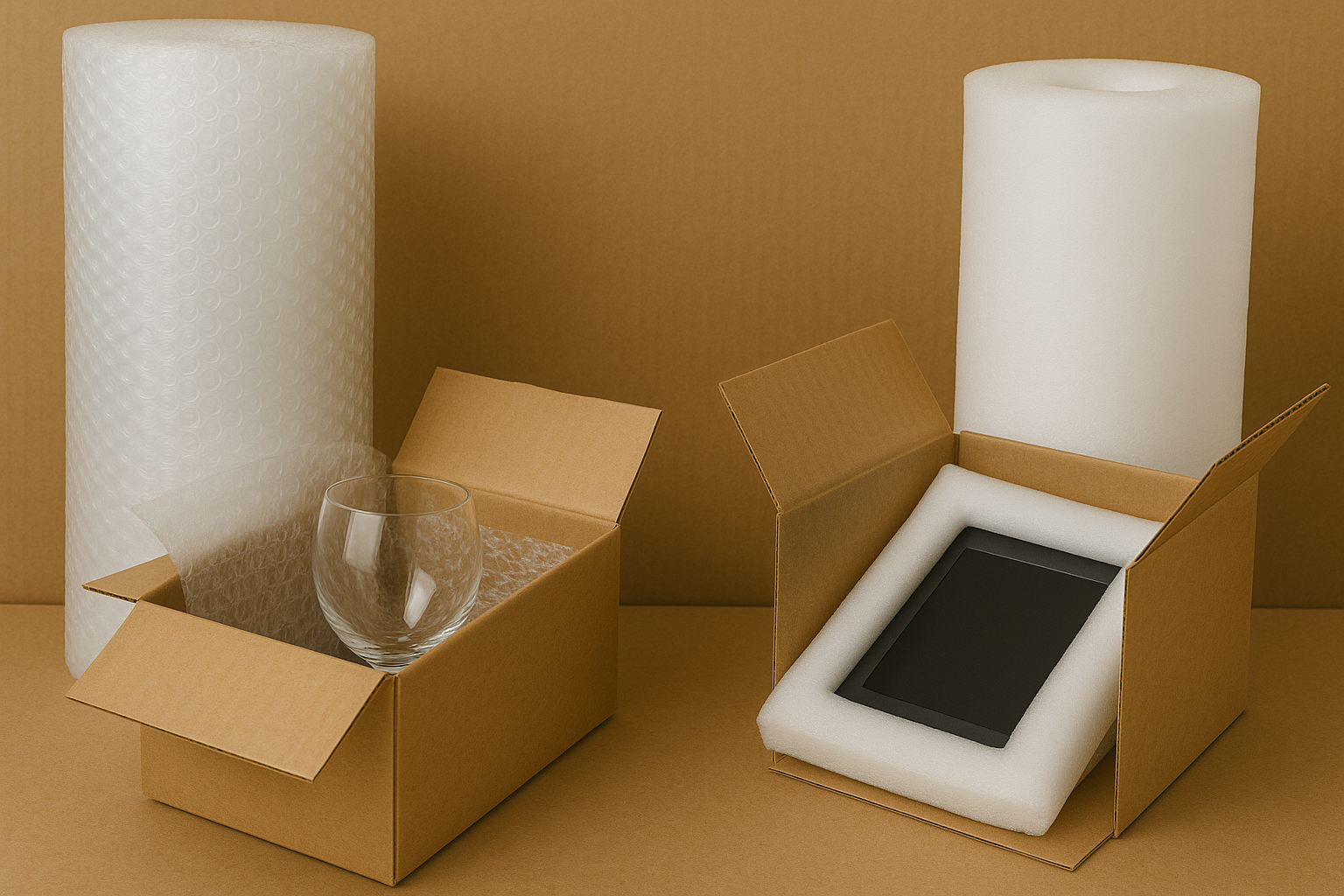
When you’re shipping fragile items, your choice of protective material will undoubtedly mean the difference between a safe delivery and a shattered mess. Whether you’re shipping handmade mugs, or electronics, selecting the proper protective packaging solutions is extremely important. And that brings us to a hotly debated packaging topic — bubble wrap or foam wrap. Both packaging materials are definitely two industry favorites. But which one actually provides better protection for your fragile items? Let’s find out.
What Makes Bubble Rolls So Popular?
Bubble rolls, or bubble wrap, have plastic sheets with pockets of air that create little pillows. This is exactly what makes bubble rolls so good at absorbing shock and limiting the movement of items during transit.
Why do so many people like using bubble rolls?
- Great for cushioning fragile goods
- Very light, so shipping costs stay low
- Easy to wrap around odd-shaped or irregular items
- Great for glass, ceramics, and electronics
If you’re dealing with products that can easily crack, chip, or break, bubble wrap might just be your best bet. Especially when it comes to the battle of bubble wrap vs foam wrap, bubble rolls tend to offer superior impact protection. In fact, many trusted bubble roll manufacturers in Mumbai recommend bubble rolls as the first line of defense for high-fragility items.
Foam Rolls: The Understated Hero
Foam rolls are made from materials such as polyethylene, and act as a soft, yet firm surface, giving cushioning without the bouncy feeling of bubble wrap; they allow for consistent coverage – as opposed to bubble wrap that works well for surface-sensitive items.
Do you want to use foam wrap?
- Provides excellent resistance to scratches (and scuffing)
- Provides a clean, smooth layer of protection
- Works well for stacking or long-term storing items
- Suitable for appliances, polished items, or products with painted surfaces.
When coming up with fragile item packing tips, foam rolls are great for material that you want to look pristine, with no markings or smudges when it arrives.
Bubble Wrap vs Foam Wrap – Which One Should You Choose?
Let’s make it simple. If your primary concern is impact or drop protection, go with bubble wrap. If you’re more worried about scuff marks, scratches, or keeping a sleek finish intact, foam wrap is the smarter choice.
Still confused? Here are a few cues:
- Use bubble wrap for items like ceramic vases, wine glasses, and electronics
- Choose foam rolls for TV screens, lacquered furniture, artwork, and kitchen appliances
- For high-value fragile goods, use both — wrap in foam first, then double down with bubble wrap
This strategic combo gives you the best of both worlds in protective packaging solutions. In fact, several bubble wrap bag manufacturers suggest dual layering for optimal protection during cross-country shipments.
Fragile Item Packing Tips – From the Experts
Picking the right material is only half the job. Proper packing technique makes all the difference. Here are tried-and-tested fragile item packing tips to protect your products:
- Always wrap each item separately to prevent internal damage
- Don’t rely on just outer cushioning — layer from the inside out
- Fill voids inside the box with air pillows or paper to prevent movement
- Use strong packing tape to secure edges and seams
- Clearly label your package with “Fragile” and handling directions
A solid packing method, paired with the right material, is your best bet for avoiding damage.
Where Each Material Excels
Bubble wrap truly shines during transit. It’s built for motion, vehicle vibrations, conveyor belt bumps, and accidental drops.
Foam wrap, on the other hand, thrives in storage. It prevents pressure marks and rubbing, making it a favourite for warehousing, electronics, and retail-ready products.
So when comparing bubble wrap vs foam wrap, remember it’s not always about which is “better,” but which is better suited to your product’s journey.
Why Not Use Both?
Sometimes, the smartest move isn’t picking one — it’s using both together.
A foam base layer gives your product surface protection, while a bubble wrap layer adds impact resistance. This combo is especially useful for e-commerce, fragile retail goods, or long-distance deliveries.
Think of them not as rivals, but as teammates in your protective packaging solutions arsenal.
Packitup Tip: We Help You Wrap It Right
At Packitup, we think fragile products deserve more than just a gamble. We have spent years ensuring that businesses pack smarter, safer, and worry-free. Whether shipping electronics, artwork, kitchenware, or glass decor, we have the appropriate packaging material to accommodate it all. As a trusted bubble roll manufacturer in Mumbai and one of the leading bubble wrap bag manufacturers, we understand that good packaging isn’t one-size-fits-all. Our experience as reliable plastic packaging manufacturers allows us to recommend the right materials based on your product’s needs. Bubble wrap, foam wrap, and everything else in between — we care about making sure that your product travels as securely as it can!
Bubble rolls have air-filled pockets that cushion delicate products during shipping, helping reduce breakage. They’re a go-to solution for fragile packaging needs.
FAQs
What are bubble rolls, and why are they ideal for fragile items?
Bubble rolls have air-filled pockets that cushion delicate products during shipping, helping reduce breakage. They’re a go-to solution for fragile packaging needs.
Does Packitup manufacture air bubble rolls for industrial use?
Absolutely. As a reliable air bubble roll manufacturer in Mumbai, Packitup supplies durable and high-quality bubble rolls designed for industrial and commercial packaging.
Can I use both foam rolls and bubble rolls in the same package?
Absolutely. Foam rolls protect the surface, while bubble rolls guard against impact — a smart combo for high-value or fragile items.
Which industries commonly use bubble rolls and foam rolls?
Industries like e-commerce, electronics, and home décor rely on bubble rolls for cushioning, while foam rolls are used for polished or delicate items.
Can polyethylene foam be used for long-term storage of items?
Absolutely. Polyethylene foam is ideal for long-term storage because it resists compression, moisture, and surface damage — perfect for appliances, artwork, and electronics.
Are Packitup’s packaging materials safe for storing sensitive items long-term?
Yes, our foam rolls and bubble rolls are non-abrasive, moisture-resistant, and ideal for long-term storage without damaging sensitive surfaces.
Why choose Packitup as your bubble roll supplier in Mumbai?
Packitup is a trusted bubble roll manufacturer in Mumbai, known for consistent quality, custom sizing, and fast delivery to meet diverse packaging demands.