
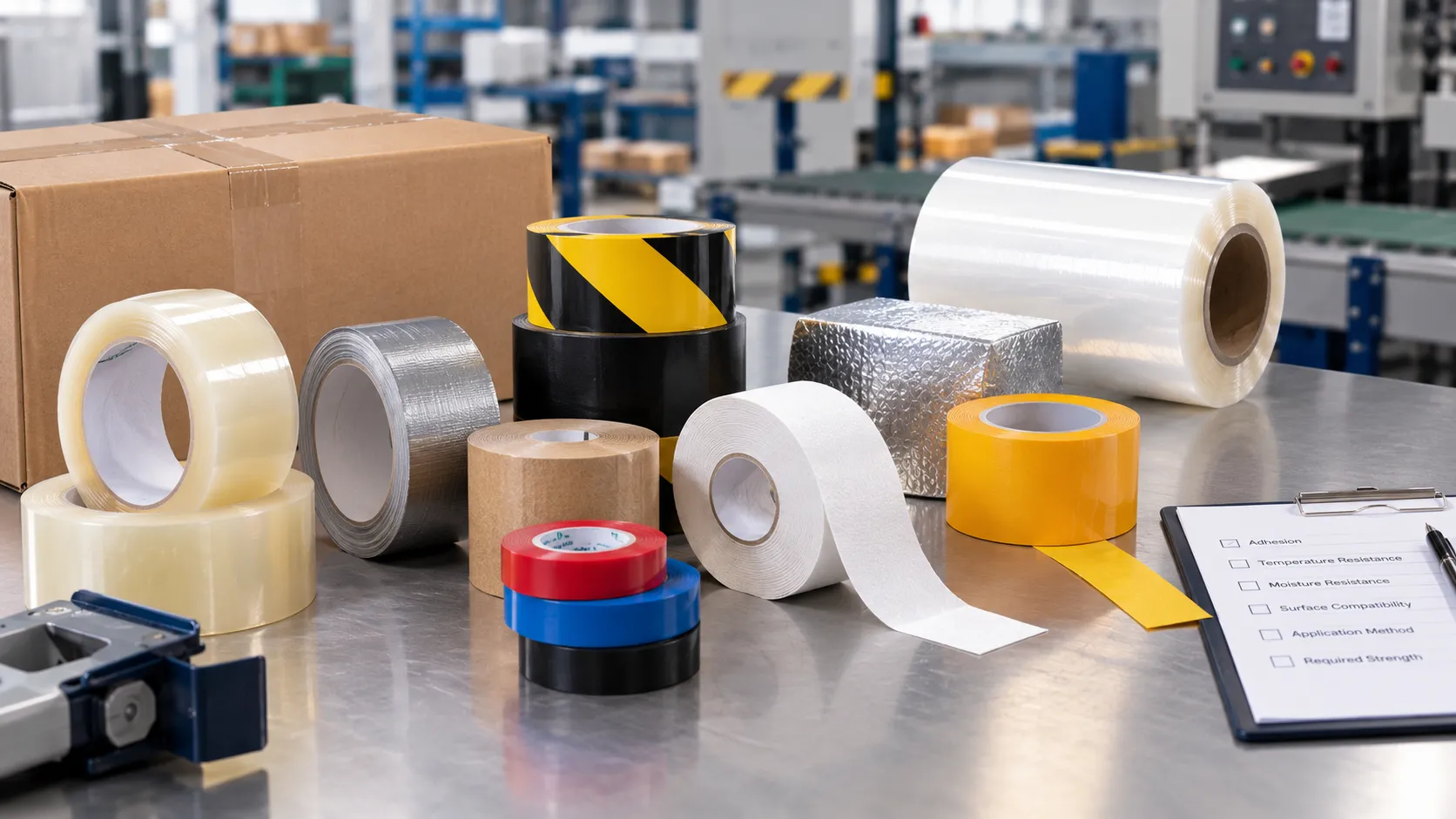
A tape used to seal a carton has a very different job from one used to join two machine components. Yet, it is easy to treat all adhesive tapes as if they work in the same way. In manufacturing, that can lead to weak joints, peeling, residue, or damaged surfaces.
Tape selection should begin with the job at hand. The material being joined, the weight it needs to hold, the surrounding temperature, and how the tape will be applied all play a role. A good industrial tape supplier can also help when the application has specific requirements that are difficult to judge from the tape alone.
What should you look at before buying industrial tape?
Before placing an order, get a clear picture of the actual working conditions. These points are worth checking:
- Surface: Is the tape going on cardboard, metal, plastic, glass, wood, or a painted surface?
- Bond: Does it need to hold a light package or keep a component firmly in place?
- Temperature: Will the tape face heat from machinery, cold storage, or changing temperatures?
- Moisture: Will it be exposed to water, humidity, or condensation?
- Chemicals: Could oil, grease, cleaning agents, or other chemicals come into contact with it?
- Texture: Is the surface smooth or does it have a rough or uneven finish?
- Application: Will workers apply it by hand, or will a machine handle the process?
- Removal: Should the tape stay permanently or come off after a particular stage?
These details give industrial tape manufacturers a much clearer idea of what the tape needs to do.
Which tape works for different manufacturing jobs?
The best tape for one process may be completely unsuitable for another. Here are some common uses.
- Packaging and Carton Sealing
Boxes go through a lot before they reach their destination. They may be stacked, moved between facilities, loaded onto vehicles, and stored for days or weeks.
Tape used for this work should provide a dependable seal on the carton.
Common uses include:
- Closing corrugated boxes
- Sealing shipping cartons
- Bundling packages
- Securing lightweight products
- Sealing cartons on packing machines
When comparing packing tape manufacturers, look at the tape’s backing, width, adhesive and suitability for the carton material. A tape that works well by hand may not be the right choice for an automated packing machine.
- Component Assembly
In some manufacturing processes, tape is used to hold parts together instead of using screws, clips, or other mechanical fasteners.
The important points here are:
- Weight of the part
- Size of the area being bonded
- Type of surface
- Required bond strength
- Expected temperature
- Whether the joint is permanent or temporary
A very strong adhesive is not automatically the answer. If it does not suit one of the surfaces, the joint may still fail.
- Surface Protection
Finished materials can pick up scratches during cutting, handling, assembly, or transportation. A protective tape can act as a temporary layer between the finished surface and the surrounding environment.
It may be used on:
- Metal sheets
- Glass
- Plastic parts
- Painted surfaces
- Finished components
For this use, removal deserves attention. The tape should stay in place during handling but should not leave a difficult-to-remove adhesive layer when the protection is no longer needed.
- Electrical and Insulation Work
Tape is also used around electrical components, wires, and cables. Here, general adhesive strength is only one part of the selection.
Look at:
- Insulation properties
- Temperature range
- Flexibility
- Thickness
- Moisture resistance
- Compatibility with the material
Electrical applications should be matched with the required technical specifications rather than relying on a general-purpose tape.
- Splicing and Production Lines
Some factories work with rolls of film, paper, foil, fabric, or similar materials. When one roll finishes, the next one needs to be joined quickly so that production can continue.
For these jobs, manufacturers may need tape that offers:
- Quick bonding
- Reliable adhesion
- Even thickness
- Easy handling
- Consistent performance during production
The tape becomes part of the production process, so its performance needs to fit the speed and method of the line.
How do working conditions change the tape you need?
The same tape can behave differently when the environment changes. A product that performs well inside a dry warehouse may not be suitable for a hot production area or an outdoor application.
| Application / Condition | What to Look for in the Tape |
| Heavy-duty bonding | Strong adhesion and good tensile strength |
| Hot equipment or surfaces | Heat-resistant adhesive |
| Damp areas | Moisture-resistant tape |
| Outdoor use | UV and weather resistance |
| Rough surfaces | Flexible adhesive that can follow the surface |
| Temporary fixing | Easy and clean removal |
| Clean-finish applications | Low-residue adhesive |
| Machine application | Consistent thickness and smooth release |
If the conditions are unusual, discuss them with an industrial tape supplier before selecting a product.
Why does the adhesive make such a difference?
The backing is easy to notice, but the adhesive often determines how the tape behaves once it is applied.
Different adhesives are used for different purposes:
- Acrylic: Useful for applications where resistance to environmental conditions is important.
- Rubber-based: Known for good initial grip on many commonly used surfaces.
- Hot melt: Often chosen when quick initial bonding is needed.
- Permanent adhesive: Intended for applications where the tape is expected to remain in place.
- Removable adhesive: Used when the tape needs to come off after a temporary application.
This is why experienced adhesive tape manufacturers can be useful when a standard tape does not meet the requirements of a particular process.
What should you ask an industrial tape supplier?
Buying tape for regular production is different from buying a few rolls for occasional use. Availability, consistency, and product options can all affect day-to-day operations.
Before selecting an industrial tape supplier, ask about:
- Available tape types
- Width and thickness options
- Adhesive choices
- Sample rolls for testing
- Custom sizes
- Product specifications
- Regular supply capacity
- Packaging and storage requirements
- Experience with similar manufacturing applications
It is also worth checking whether the supplier has access to products from established industrial tape manufacturers.
What tape selection mistakes can cause problems?
Some issues have nothing to do with the tape itself. The wrong product or application method can cause trouble.
Avoid these common mistakes:
- Picking a tape simply because it is cheaper
- Assuming one tape can handle every job
- Ignoring the surface material
- Applying tape to dusty or oily surfaces
- Forgetting about temperature and moisture
- Choosing the wrong width or thickness
- Ordering in bulk without a trial
- Storing tape in unsuitable conditions
- Using ordinary packing tape for a job that needs a specialised industrial product
Even when dealing with experienced packing tape manufacturers, the tape should be matched to the packaging material and sealing method.
How should you test a tape before ordering in bulk?
A small trial can save a lot of trouble later. It does not need to be complicated.
- First, prepare the surface. Remove dust, oil, grease, and moisture.
- Next, apply a sample. Use the same application method followed on the production floor.
- Then, check the bond. Look at the initial grip and whether the tape starts lifting from the edges.
- Put it through the real conditions. If the tape will face heat, moisture, movement, or load, test it under those conditions.
- Check it again after some time. A tape may hold initially but lose adhesion later.
- Remove it if the application is temporary. Look for excessive residue or damage to the surface.
Once the sample performs as expected, run a limited production trial before committing to a large quantity.
Selecting industrial tape for the job, not just the product
There is no need to make tape selection more complicated than it is. Start with the job, understand the surface and working conditions, and then look for a tape that fits those requirements.
Businesses can compare options from adhesive tape manufacturers and industrial tape manufacturers based on the actual application. An experienced industrial tape supplier can help with product selection when standard options do not meet the need. For carton sealing, packing tape manufacturers can also provide products suited to different packaging processes.
Packitup supplies industrial tapes for manufacturing and packaging applications, giving businesses options for different production requirements.
Explore Packitup’s industrial tapes and find the right tape for your application.